




In a world where over 5.5 billion people use the internet and most buying decisions begin with an online search, digital marketing is no longer optional - it's essential. But what exactly is it, and how can it help your business grow?
This guide breaks it all down clearly, whether you're a business owner exploring this for the first time or ready to scale your strategy in 2025.
What Is Digital Marketing?
Digital marketing is the promotion of products, services, or brands through digital channels - the internet, search engines, social media, email, and mobile apps.
Unlike traditional marketing (TV, print, billboards), digital marketing lets brands reach their exact target audience, measure results in real time, and adjust strategies instantly - often at a fraction of the cost.
At its core, digital marketing is about connecting with your customers where they already spend time: online.
Types of Digital Marketing
Digital marketing is an umbrella term covering many channels and strategies. Here are the most important ones:
1. Search Engine Optimization (SEO)
SEO improves your website so it ranks higher in organic (unpaid) Google search results. When someone searches for your product or service, SEO is what makes your website show up.
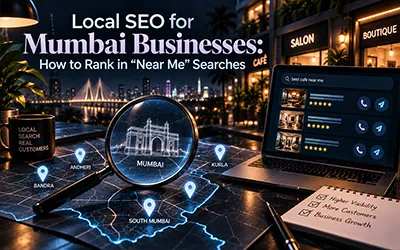
Example: A Mumbai restaurant optimizes its website for "best biryani in Andheri East" and starts appearing in Google's top 3 results, driving walk-in customers consistently.
Best for: Long-term, sustainable organic traffic.
2. Search Engine Marketing (Google Ads / SEM)
SEM involves paying to appear at the top of search results for specific keywords. You pay only when someone clicks - known as Pay-Per-Click (PPC).
Example: A law firm bids on "divorce lawyer Mumbai" and their ad instantly appears at the top, driving phone calls and inquiries.
Best for: Immediate visibility and fast lead generation.
3. Social Media Marketing (SMM)
Creating and sharing content on Instagram, Facebook, LinkedIn, and YouTube to build brand awareness and engage audiences - through both organic posts and paid ads.
Example: A clothing brand posts Instagram Reels showcasing new collections and runs targeted Facebook Ads to retarget website visitors.
Best for: Brand awareness, community building, B2C businesses.
4. Content Marketing
Creating valuable content - blogs, videos, infographics, ebooks - that attracts and educates your target audience. Instead of pushing ads, you pull customers in by solving their problems.
Example: A financial services firm publishes weekly blogs on tax-saving tips, attracting thousands of organic readers - many of whom become clients.
Best for: Building authority, improving SEO, nurturing leads.
5. Email Marketing
Sending targeted messages to a subscriber list to promote products, share updates, or nurture leads. It consistently delivers one of the highest ROIs in digital marketing.
Example: An e-commerce store sends abandoned cart emails - "You left something behind!" - automatically recovering lost sales.
Best for: Customer retention, lead nurturing, promotional campaigns.
6. Performance Marketing (Meta Ads)
Results-based advertising where you pay for specific actions - leads, sales, or app installs. Meta (Facebook + Instagram) Ads are a major platform here.
Example: A real estate brand runs Meta lead ads targeting people aged 30–50 in Mumbai interested in property, generating 200+ qualified inquiries in a month.
Best for: Lead generation, e-commerce sales, measurable ROI campaigns.
7. Influencer Marketing
Collaborating with creators who have large, engaged followings to promote your brand authentically.
Example: A skincare brand partners with 20 Mumbai micro-influencers, each posting honest reviews that reach a combined audience of 500,000 followers.
Best for: Brand awareness, product launches, reaching new audiences.
Key Benefits of Digital Marketing
1. Precise Targeting
Reach people by location, age, interests, search behavior, and even past purchase history - ensuring your message reaches the right person at the right moment.
2. Measurable Results
Unlike a billboard, every digital campaign is trackable - clicks, conversions, cost per lead, and revenue generated. You always know what's working.
3. Cost-Effective
SEO, email marketing, and content marketing deliver higher long-term ROI compared to traditional channels, even on modest budgets.
4. Levels the Playing Field
A startup with a smart strategy can compete with established players. In digital marketing, creativity and execution matter more than budget.
5. Global Reach
A small business in Mumbai can reach customers across India - or worldwide - without the massive costs traditional advertising demands.
Which Digital Marketing Channel Should You Use?
The right mix depends on your business type, budget, and goals. Most successful brands use a combination of channels.
How to Get Started with Digital Marketing
If you're new to digital marketing, here's a simple starting point:
Build or optimize your website - it's your digital headquarters
Set up Google Analytics and Search Console - to track performance
Start with SEO - research keywords your customers search for
Create a social media presence - focus on 1–2 platforms
Run a small paid campaign - test Google Ads or Meta Ads
Build your email list - start small and grow consistently
You don't need to do everything at once. Start with what makes sense for your stage of business and scale from there.
How ABC Designs Can Power Your Digital Marketing
At ABC Designs, we're a full-service digital agency in Mumbai offering end-to-end digital marketing - SEO, Google Ads, Meta Ads, social media management, content creation, and more.
Our team of strategists, designers, and marketers work together to build campaigns that don't just look good - they deliver measurable results.
Let's grow your business online.
FAQs
Q: Is digital marketing suitable for small businesses?
Absolutely. Digital marketing is especially powerful for small businesses - it's cost-effective, targeted, and scalable from any budget.
Q: What's the difference between digital marketing and social media marketing?
Social media marketing is a subset of digital marketing. Digital marketing covers all online channels - SEO, email, PPC, content, and more.
Q: How do I measure digital marketing success?
Key metrics include website traffic, keyword rankings, conversion rate, cost per lead (CPL), and return on ad spend (ROAS).
Q: How much should I spend on digital marketing?
Most growing businesses allocate 7–10% of revenue to marketing. A good agency will help you allocate that budget for maximum impact.